
- Published on
BIM Services in Singapore: Cost, Scope, Outsourcing
Key Takeaways
- Since 1 October 2026, BIM submission is mandatory for all new and A&A works unless the project qualifies for the Direct Submission Process.
- Specialist trade contractors pay the least for modelling. Main contractors carry the heaviest scope because LOD 400 drawing production sits with them.
- IFC+SG data requirements are what trip up firms that outsource BIM to non-Singapore providers.
- A common way to control Scan to BIM cost is to model only elements above 10mm in diameter. Smaller items are flexible in placement and do not need coordination.
- 4D is a main-contractor requirement on LTA and HDB projects. Specialist contractors need not price it into BIM delivery.
BIM services in Singapore cover model development, CORENET X compliance, multidisciplinary coordination, as-built modelling, and 4D scheduling, with cost driven by your trade scope, the level of detail required, and project duration. In this article, we look at the cost of BIM delivery in Singapore, the common requirements, and how architects, builders, and specialist contractors can meet compliance requirements.
Here is the short version of what moves the price in each scope, before we go through them one by one:
| BIM service | What drives the cost |
|---|---|
| BIM model development | Extent of the area modelled; trade-only scope is cheapest, main-contractor LOD 400 is heaviest |
| CORENET X compliance | IFC+SG parameter errors to resolve, up to 5,000 in a typical model |
| BIM coordination | Project duration and the number of services being coordinated |
| As-built and Scan to BIM | Intensity of services in the building; a separate, time-intensive scope |
| 4D construction scheduling | Main contractors on LTA and HDB projects only; specialists need not price it in |
| Quantity takeoff | No additional cost if the project is configured properly |
BIM Model Development
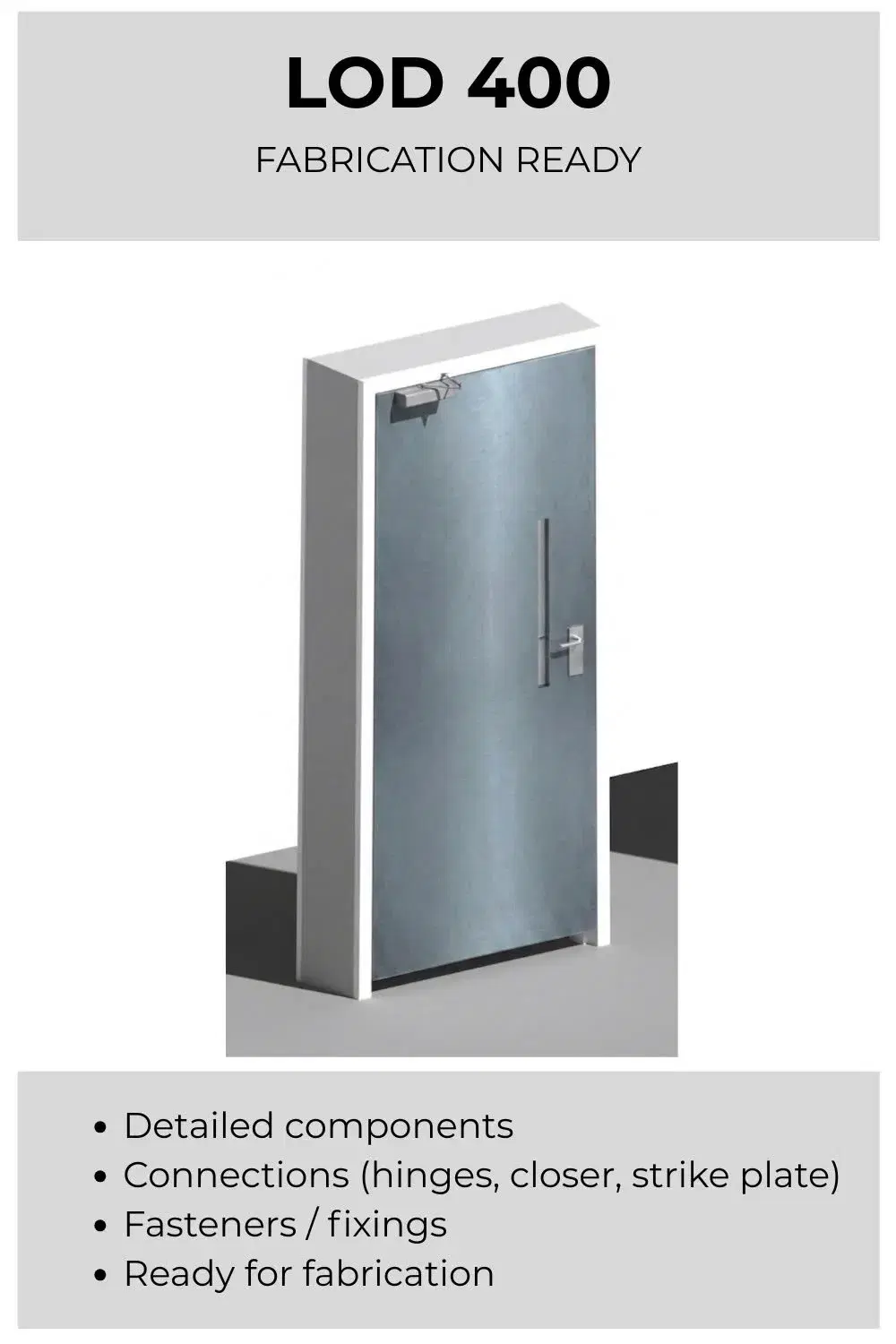
BIM model development is the act of building the BIM models for critical workflows like clash detection and drawings production. In the past 20 years, Singapore firms have gradually made the shift from 2D drawings in AutoCAD to full-fledged BIM production.
Since 1 October 2026, BIM submission is mandatory for all new and Alteration & Addition (A&A) works unless the asset qualifies for the Direct Submission Process, which applies to smaller projects like landed homes. This means a growing number of projects require the submission of 3D BIM models.
The cost of producing BIM models depends on the extent of the area to be modelled. Specialist trade contractors who only need to model their respective trade sit at the lowest cost of modelling. A plumbing or ACMV subcontractor, for example, models only the services within their own package, references the structural model, and produces shop drawings for their trade.
On the other hand, main contractors and builders have the greatest modelling complexity due to the scope of work involved. They usually coordinate the structural model against the various services, involving a large number of specialist contractors. In addition, the construction model needs to be modelled to a high level of detail, typically LOD 400, for the production of comprehensive drawing sets like Wall Setting Out, Combined Services Drawings (CSD), SEM, and Concrete Body Plans.
CORENET X Compliance
CORENET X is a regulatory scheme to standardise the data formatting of BIM data in Singapore. Projects pass through four coordinated checkpoints, the Design, Piling, Construction, and Completion Gateways, where the project team submits one federated BIM model and the agencies (BCA, URA, SCDF, PUB, NEA, and others) return a single coordinated response. Our CORENET X guide covers the submission process in detail.
Interestingly, despite Revit being the most widely used BIM authoring software in Singapore, the various regulatory agencies still push for openBIM formats like IFC+SG. Architects and engineering consultants are required to develop LOD 350 BIM models and ensure their models contain the required data parameters, known as IFC+SG, as part of their project submission. This is the part that trips up most firms that rely on BIM outsourcing to non-Singapore providers.
The compliance workload is not trivial. In our benchmark tests, a typical BIM model contains up to 5,000 IFC+SG parameter errors that need to be corrected before CORENET X submission, and resolving them manually can take up to a week. This is work that lands on the consultant whether or not the modelling itself was outsourced, and it is a real line item in the cost of BIM production.
Fortunately, firms working in Singapore can make use of the Bimeco Validator to ensure their BIM is structured in a format accepted by the regulatory agencies. The Validator runs in the browser, checks models against the mandatory IFC+SG parameters in BCA's industry mapping table, and lets teams fix values before submission. A free plugin on the Autodesk Marketplace transfers the corrections back to Revit (2025, 2026, and 2027 are supported). Using it speeds up the development of compliant BIM models and helps drive down the cost of BIM production.
BIM Coordination

BIM coordination requires experienced personnel, and depending on your project profile, you may need to find dedicated BIM specialists. Coordination requires familiarity with the project typology. A data centre project needs a coordinator with extensive data centre experience to support MEP coordination, as they would be familiar with the clearances required between the cooling systems. Hospital projects are another example that calls for specialised expertise, since they require the development of Room Data Sheets.
Finding experienced BIM Coordinators is essential, as they manage the coordination of models, resolve clashes, and ensure the timely production of the relevant drawings for each trade. Coordination typically runs on a federated model in a Common Data Environment (CDE), where clashes are logged as issues and tracked until they are closed. Because the coordinator needs to be actively involved in the project, the cost of BIM coordination is driven by the project duration and the number of services that require coordination.
As-Built Modelling and Scan to BIM
For green-field projects, a common requirement is for the main contractor to hand over a 6D BIM model. This is essentially an LOD 500 model that contains all the necessary data parameters. It is essential to specify this in the project scope at the start, as it requires the BIM service provider to consolidate asset information from equipment suppliers to be embedded in the BIM model. Depending on the Employer's Information Requirements (EIR), the handover data may also need to be structured in COBie format for facilities management.
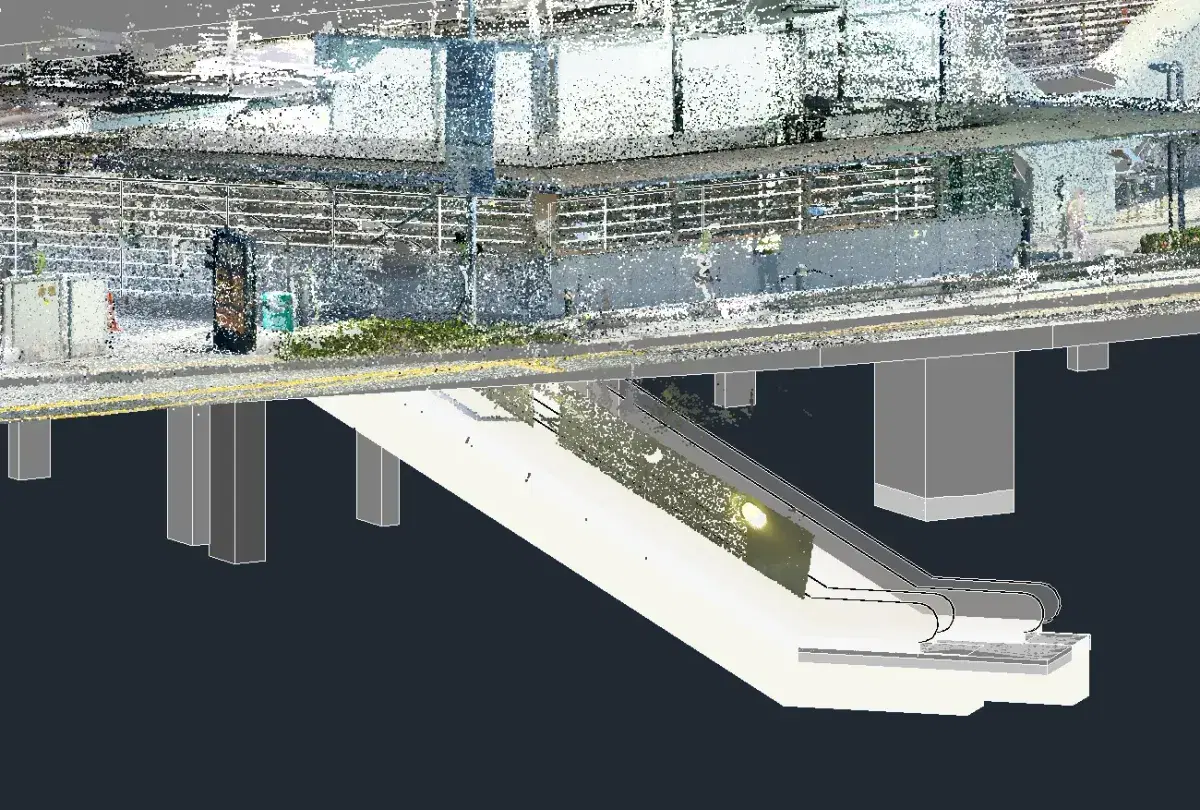
There is also a growing number of brown-field projects that require as-built modelling. As a building evolves, the CAD plans become outdated or go missing. This is where a surveyor is engaged to capture the existing condition of the building, which is then converted to BIM. The surveyor's point cloud is geo-coordinated to Singapore's SVY21 coordinate system, which matters for A&A works where the new model must sit correctly against regulatory submissions.
The cost of as-built modelling is typically a separate scope of work because it requires BIM teams to trace out the existing structures from the point cloud to rebuild the model. This is usually a time-intensive process. As a reference point, a typical Scan to BIM project for a 5,000 sqm building in Singapore costs approximately $20,000, split roughly equally between surveying and BIM modelling; our Scan to BIM guide breaks down the two components in detail.
The cost of Scan to BIM depends on the intensity of the services running through the building. For example, if Extra Low Voltage (ELV) services need to be modelled, this drives up the cost significantly, as it is a time-intensive process to model them in. One common solution is to only model elements that are beyond 10mm in diameter. Smaller items tend to be flexible in their placement and do not need to be factored into the coordination process.
4D Construction Scheduling and Quantity Takeoff
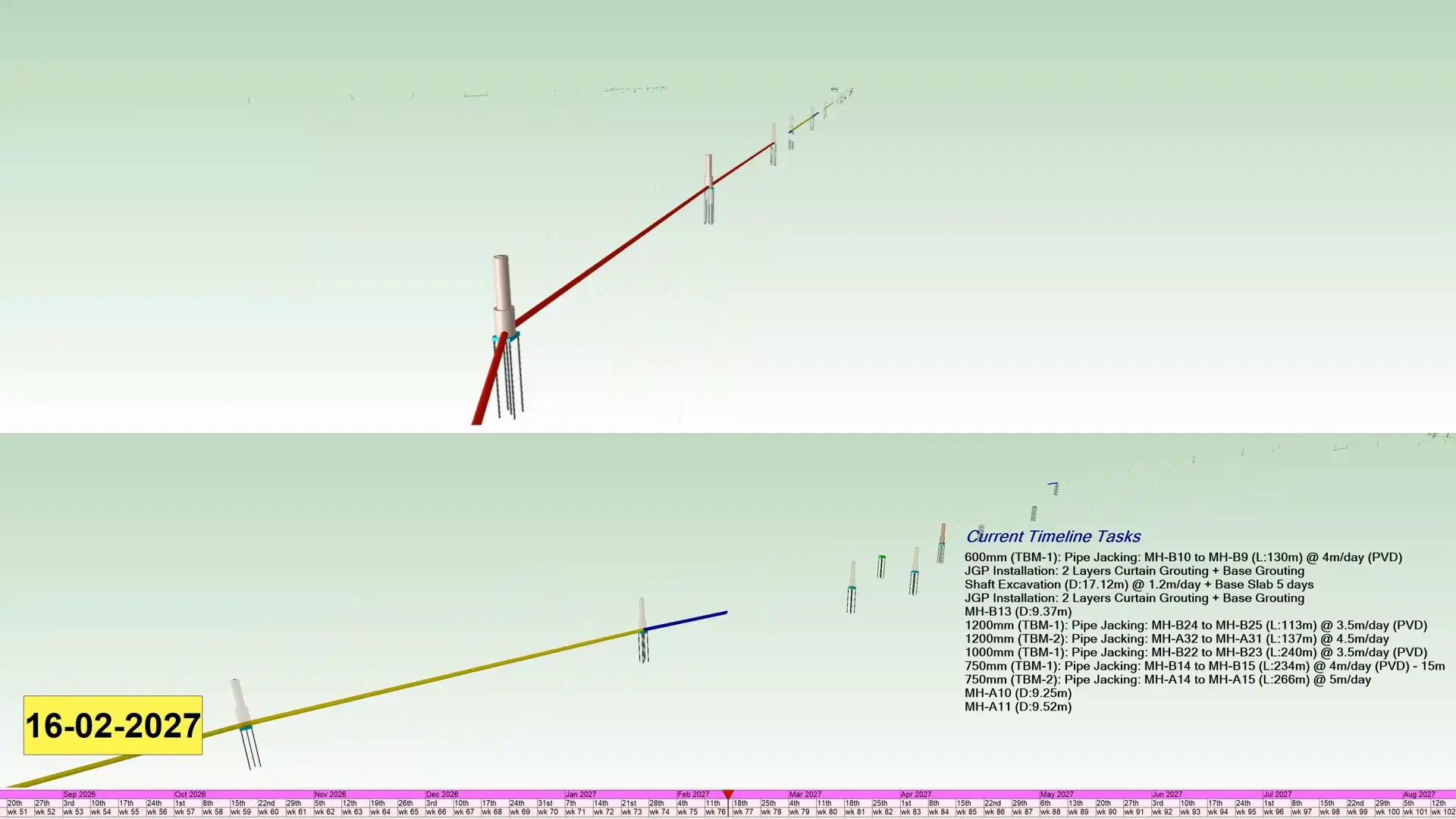
4D construction scheduling refers to the process of combining the schedule with the BIM model. This usually involves a relatively low-LOD model like LOD 300, developed early in a project. Project schedules are determined by the project teams, not the BIM teams. The role of the BIM team is simply to combine it into an animated sequence using a 4D scheduling software like Synchro 4D.
In Singapore, many LTA and HDB projects have a 4D submission requirement. This is usually mandated by the project owner in the EIR. It is a requirement for main contractors, so specialist contractors need not factor this into the cost of BIM delivery.
Quantity takeoff is rarely a requirement, but many main contractors prefer to extract quantities from the BIM model. This is particularly useful for estimating project costs for items like concrete, rebar, and other materials. A solution like Forma Takeoff allows BIM teams to easily extract cost and material quantities from the BIM model. If the project is configured properly, this should not result in additional cost in BIM production.
BIM Companies in Singapore
There are a number of BIM providers in Singapore like AcePLP, Pinnacle, BIMAGE, and more. Their operating models differ, from manpower placement to full digital delivery; we compare them in our guide to the best BIM companies in Singapore, and our BIM outsourcing guide covers how to evaluate a provider against your project scope.
The pricing model matters as much as the price. Manpower placement bills by the man-month and leaves you managing the BIM personnel yourself, while project-based delivery prices the deliverables and puts the schedule risk on the provider.
At Bimeco, we focus on project-based BIM delivery, ensuring that BIM deliverables are produced according to our customer's schedule. We have delivered 845 projects since 2005. Compliance is a key part of our work, and we are the developer of the Bimeco Validator. As part of our deliverables, we ensure our BIM is validated through the Bimeco Validator, so our work is compliant with the regulatory standards of Singapore.
Frequently Asked Questions
Table of Contents
Authors

Tags
Need a BIM Service Provider in Singapore?
Related Articles
From IFC to AI: Why Clean BIM Data Matters for Automation
Clean, structured IFC data is what lets automation and AI work reliably in BIM. Here is what to check before models move downstream.
Virtual TOP (VTOP) Singapore: A Main Contractor's Guide
What Virtual TOP is, whether it is mandatory, which projects qualify, the camera BCA expects, the five-step process, and which platform to use.
BIM for Project Owners: Benefits and Use Cases
How BIM gives a project owner visibility, cost control, and faster decisions across the lifecycle, even when the project is already over budget.