- Published on
Virtual TOP (VTOP) Singapore: A Main Contractor's Guide
Key Takeaways
- Virtual TOP is voluntary for now, but BCA has done more than 130 virtual inspections since 2024 and eight agencies now review one shared capture.
- BCA may reject a virtual inspection if pre-consultation is booked less than three days before the inspection date, so it belongs in the programme months ahead.
- The Insta360 X5 used alongside CupixWorks is suitable for meeting VTOP requirements; CupixVista alone cannot attach a building plan.
- Incomplete works seen in a capture are rejected, and a scan must be no more than three months old at submission.
- Progress tracking, Virtual TOP and scan-to-BIM are one capture habit, not three digitalisation projects.
Virtual TOP (VTOP) is a Temporary Occupation Permit inspection that Singapore's Building and Construction Authority (BCA) conducts remotely from a 360-degree capture of the completed site instead of a physical walk by its officers. The same route covers the Certificate of Statutory Completion (CSC), and BCA calls it Virtual TOP/CSC Inspection (360 Capture).
Construction sites in Singapore are being asked to digitalise faster, and the push is coming from regulators and public clients alike in the name of productivity. Progress tracking with 360 capture, Virtual TOP inspections and scan-to-BIM are the three requirements main contractors now meet most often, whether written into a tender, expected by a developer or accepted by BCA in place of a site visit. This article focuses on Virtual TOP. It sets out what BCA requires in a virtual inspection, what the industry needs to know about eligibility, timelines and platforms as of September 2026, and how a main contractor can implement it so that one site walk also serves progress tracking, quality records and scan-to-BIM.
What is Virtual TOP (VTOP)?
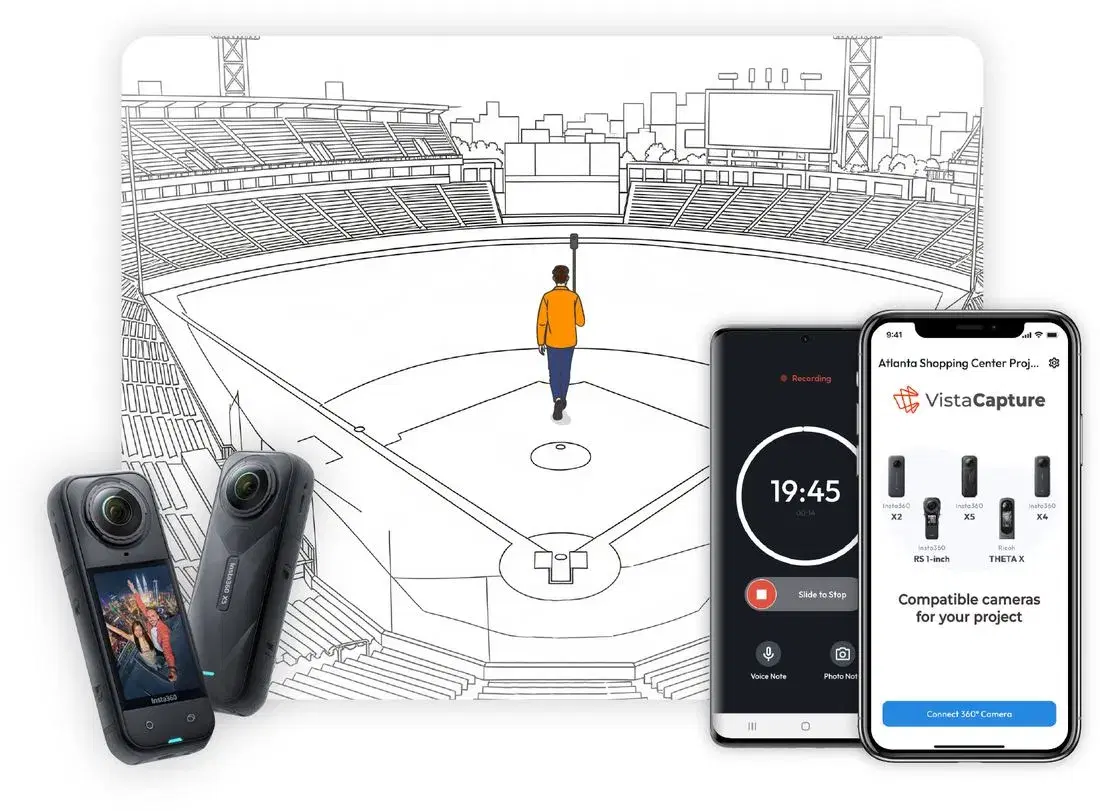
Virtual TOP is the use of 360 cameras to capture the as-built condition of a site. The 360 capture is accessible through a web browser, and allows key stakeholders and government agencies to review, annotate and capture issues on a platform to facilitate TOP/CSC without having to set aside time and resources for a physical site visit.
A Brief History of Virtual TOP
| When | Milestone |
|---|---|
| Apr to May 2021 | First pilot: JTC Logistics Hub @ Gul, using Light Detection and Ranging (LiDAR) and 360 photos |
| Sep to Oct 2022 | Second pilot: JTC semiconSpace at Tampines Wafer Fab Park |
| Sep 2023 | JTC Corporation (JTC) and BCA report up to 30 percent savings in inspection time and manpower |
| Dec 2023 | First commercial virtual TOP: RSP Architects and CDL at City Square Mall |
| Dec 2024 | BCA publishes the Guidebook for Virtual TOP/CSC (360 Capture), first edition |
| Jul 2026 | JTC certifies reality capture vendors under its IDDTA programme |
| Sep 2026 | Whole-of-Government Virtual Inspection: all eight TOP agencies review the same 360 scans |
What are the benefits of Virtual TOP?
Virtual TOP shortens the path from practical completion to occupation. Public sector pilots reported up to 30 percent less inspection time and manpower, and the 2026 Whole-of-Government rollout has brought TOP forward by up to two months on pilot projects. For a main contractor the benefits go beyond completing on schedule, because the same capture removes re-inspection visits, produces a permanent record of the handover condition and doubles as progress and quality documentation.
Earlier handover
With Virtual TOP, scans are submitted in phases as areas complete, so non-compliances surface while the trades are still on site, and BCA's comments arrive tagged to a plan location with a photo for the Qualified Person (QP) to close out in place. For the contractor that means an earlier completion certificate and less exposure to future liquidated damages. This reduces the time required for proper handover of the site, and allows contractors to move on quickly to their next project.
Improved site productivity
The JTC and BCA pilots measured up to 30 percent less inspection time and manpower for project teams and officers alike. Under Whole-of-Government Virtual Inspection, one capture serves all eight TOP agencies, replacing eight separately hosted site visits during the busiest weeks before handover.
Instead of having to schedule multiple site visits for the various government agencies, contractors can just capture the site once and re-use that same capture for the Whole-of-Government inspection. This process can be further enhanced by engaging outsourced VTOP specialists to assist in the capture and processing of that data.
Cleaner handover
The 360 capture is final, precise documentation of the as-built condition of the site. In the event of disputes, the capture is evidence that the site has been reviewed, thereby avoiding future liquidated damages. BCA itself recommends using 360 capture "for progress monitoring or internal checks and reporting, not just for regulatory inspection clearances", so weekly walks on the same platform double as progress records, snag lists and the point cloud for as-built models. In some cases, the capture can be used to create comprehensive digital models that serve as a Facility Management model for asset owners.
Is Virtual TOP mandatory in Singapore?
Virtual TOP is voluntary at the moment. BCA's guidebook describes 360 capture as "accepted as an alternative form of inspection evidence" in lieu of, or alongside, a physical inspection. Coverage of the September 2026 Whole-of-Government rollout confirms that adoption "remains voluntary for developers". A project that prefers a conventional physical inspection can still have one.
However, recent events suggest that is changing. BCA has conducted more than 130 virtual inspections since 2024, and eight agencies (BCA, IMDA, LTA, NEA, NParks, PUB, SCDF and URA) now review one shared capture instead of eight separate site visits. JTC has deployed 360 reality capture on more than 30 developments and runs a certification scheme for vendors, so on a JTC job "do you have a certified 360 capture platform" is a practical requirement even if the contract wording varies. At Grand Dunman, a 1,008-unit condominium, residents collected keys about two months earlier than projected after the virtual inspection route, and developers will ask their main contractors to make that possible.
Which projects qualify for Virtual TOP?
In a Full Virtual Inspection the entire TOP inspection is done from the capture. In a Hybrid Inspection the team captures the whole project but BCA accepts only selected areas virtually and inspects the rest physically. Eligibility is decided case by case at pre-consultation.
| Project type | Full virtual | Hybrid | Physical |
|---|---|---|---|
| Housing and Development Board (HDB) blocks | Blocks from the second partial-TOP phase onward | First and last residential blocks; all mixed-use spaces | |
| Private residential | Landed houses built by a developer for sale | Condominium blocks of typical design | |
| Commercial and institutional | Hotel room floors, office floors, schools and nursing homes of typical design | ||
| Industrial, parks and standalone structures | Industrial buildings with typical floor plans; parks, shelters, bus stops and linkways | ||
| Alteration and addition works | Localised works | Larger works, with the virtual areas agreed with the BCA officer | |
| Any project | Where a conventional inspection is preferred |
What is the best software for VTOP?
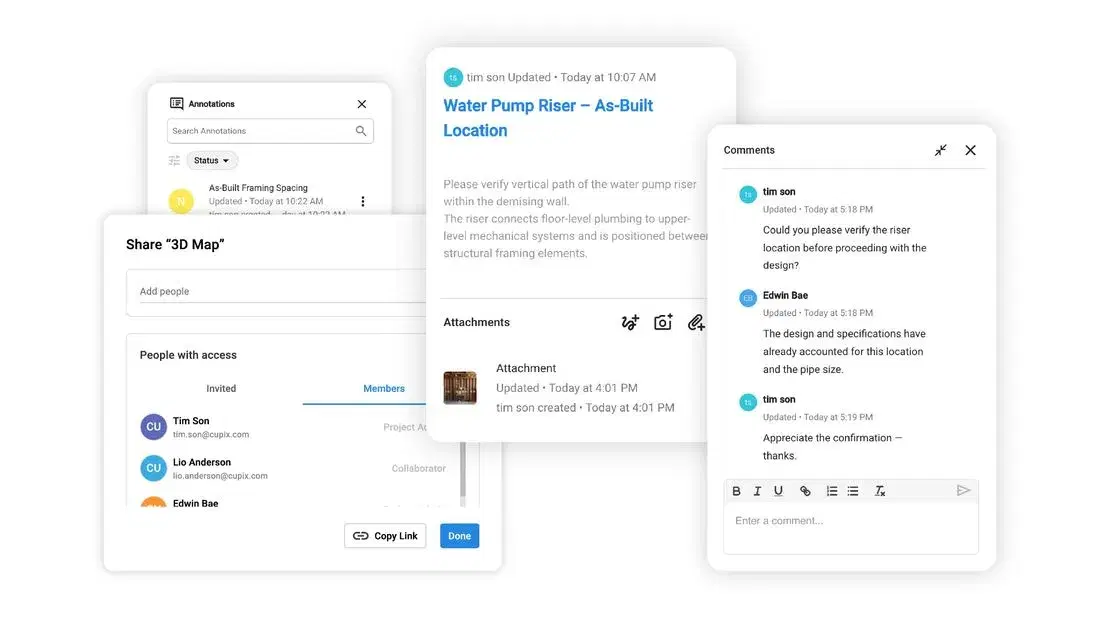
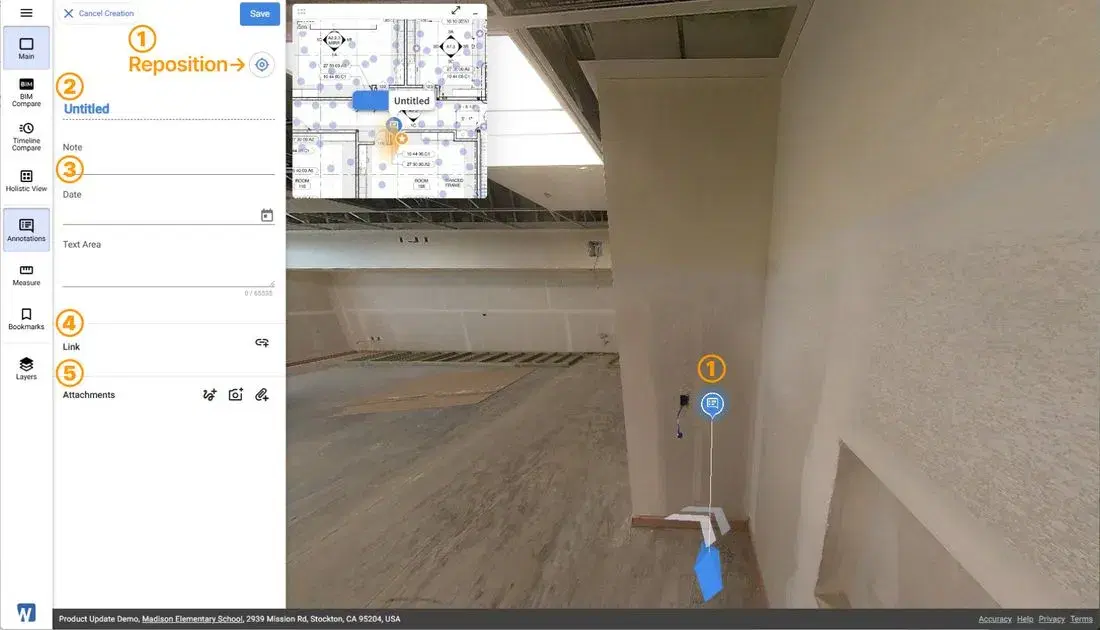
CupixVista is an example of a product that meets VTOP requirements, and its maker Cupix has been specified as one of the key contributors to BCA's VTOP guidebook. With Cupix, an operator records up to 20 minutes of 360 video per walk, roughly 6,000 square metres, and the cloud returns a point cloud, mesh and virtual tour in one to four hours. CupixVista also allows contractors to train operators on BCA's walking rules, test lighting on a real site, and run internal pre-TOP checks with pinned annotations that carry comments, attachments and a resolve button.
Here's how CupixVista stacks up against some of the requirements specified in BCA's VTOP guidebook:
| BCA requirement | What CupixVista offers | Comply |
|---|---|---|
| Continuous, spot and mixed capture | Video walk only; no spot-capture mode, small rooms must be walked | |
| Comments and photo evidence on the capture | Pinned annotations with comments, markups and attachments up to 3 GB; Photo Notes | |
| External access for BCA inspectors | Invite by email as a 3D Map Editor (public link hides annotations) | |
| Inspectors tag comments | Editors create location-pinned annotations, assign, resolve and reopen | |
| QP attaches rectification evidence | Photos, video or files on the annotation, reply in thread, mark resolved |
CupixVista cannot attach a building plan, so there are no plan-based scan zones, and any walk over 20 minutes becomes a separate model. Cupix draws the line itself: "Vista is for single scans & site surveys. CupixWorks is for long-term construction tracking." Singapore-based contractors keen to assess the suitability are free to register for our VTOP trial programme.
What is the best camera for VTOP?
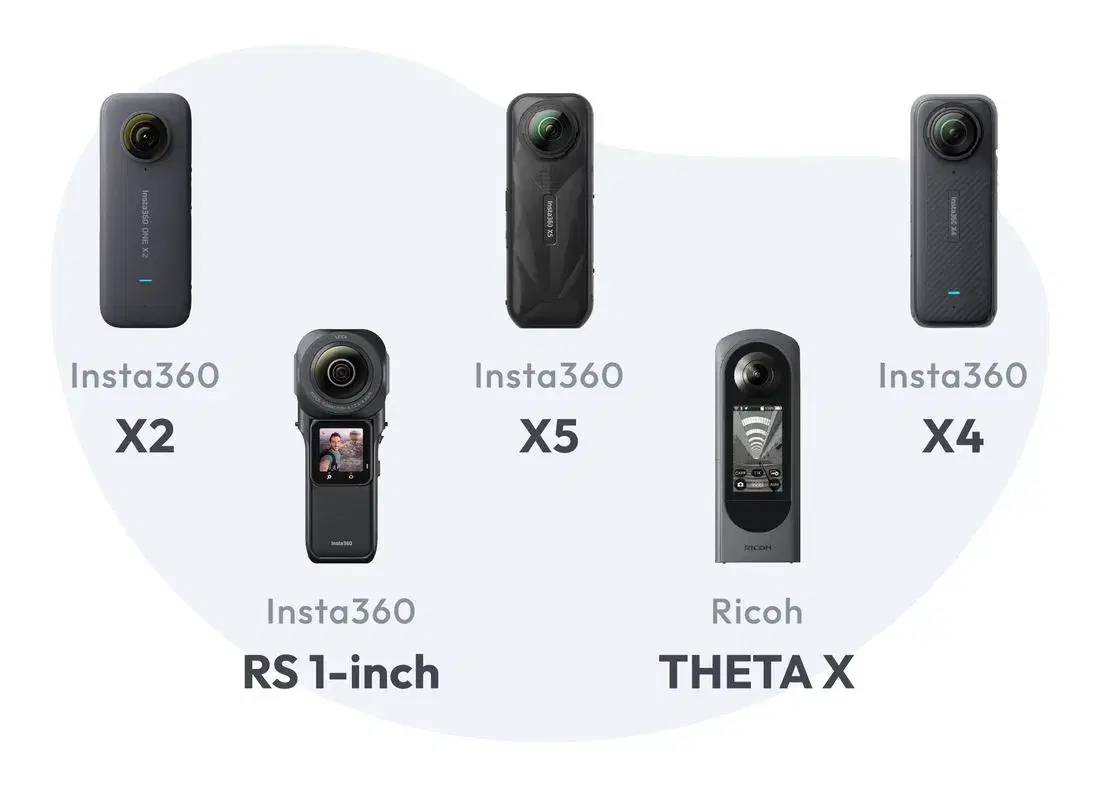
The guidebook sets minimum equipment requirements alongside the platform requirements:
- A high-quality 360 camera compatible with Android and iOS devices
- At least 6K resolution, suitable for low-light conditions, with dual one-inch CMOS sensors
- Battery for at least 60 to 90 minutes of continuous video capture
- Six-axis stabilisation with a proprietary image stabilisation algorithm
The Insta360 X5 records at 8K, can cover a 90-minute walk, has low-light settings, and features powerful image stabilisation. When used alongside CupixWorks, it is suitable for meeting VTOP requirements.
How does the Virtual TOP process work?
Step 1: Pre-consultation with BCA
The QP books a pre-consultation with the BCA Processing Officer, either directly or through the BCA feedback portal. BCA may reject a virtual inspection if the pre-consultation is scheduled less than three days before the inspection booking date, so this belongs in the programme months ahead. Bring the site layout, the split of typical and non-typical areas, and the proposed scan zones.
Step 2: The Virtual Inspection Plan
After pre-consultation the QP prepares a Virtual Inspection Plan: a list of every area to be scanned, a timeline if the capture will be split into phases, and the approved building plan with typical and non-typical zones coloured. A project may split its TOP application into several scan submissions, all within a window of three months. BCA typically takes three days to respond with its decision: full virtual inspection, hybrid inspection, or physical inspection.
Step 3: Create a Site Capture Plan
A site capture plan makes sure the surveyors are clear on the areas to capture and the works involved. An annotated CAD plan in PDF format is useful for the people walking the ground.
To avoid the hassle of a recapture, especially on a first project, follow these rules:
- All non-typical areas must be captured, including landscape, common areas and external works within the boundary.
- For typical floors, at least three floors per building must be captured, at a rate of one per ten floors, spread across the building.
- Any roof with maintenance access must be included.
- Every area on a selected floor must be captured, works must be fully complete, and the capture must be no more than three months old at submission.
- For full virtual inspections the capture is submitted before the booking date. For hybrid inspections it is submitted at least one day before.
The signed QP Declaration Form and Certificate of Supervision are due at least three working days before the booked date.
Step 4: Capture best practice
For firms looking to capture in-house, here are some rules of thumb to follow:
- Mount the camera more than 20 centimetres above the operator's head on a helmet or monopod, and keep operator height consistent between walks.
- Stay in the centre of the path, at least 2 metres from walls, and cover each area within a 5 to 10 metre radius.
- Pause 2 to 3 seconds at key locations. Walk at normal pace. Slow down when moving between bright and dark spaces, or start a new capture session.
- Attach tape-measure close-up photos wherever a code dimension must be proved, especially for the Accessibility Code. A 3D image alone does not prove a dimension.
- Self-check after every walk: are locations mapped correctly to the plan, are the close-ups attached, is anything incomplete visible in frame. Incomplete works seen in a capture are rejected.
Firms that want to take the recapture risk off their own plate can work with trained specialists to capture the site. This matters most on sites that need repeated scans.
Step 5: Regulatory Submission
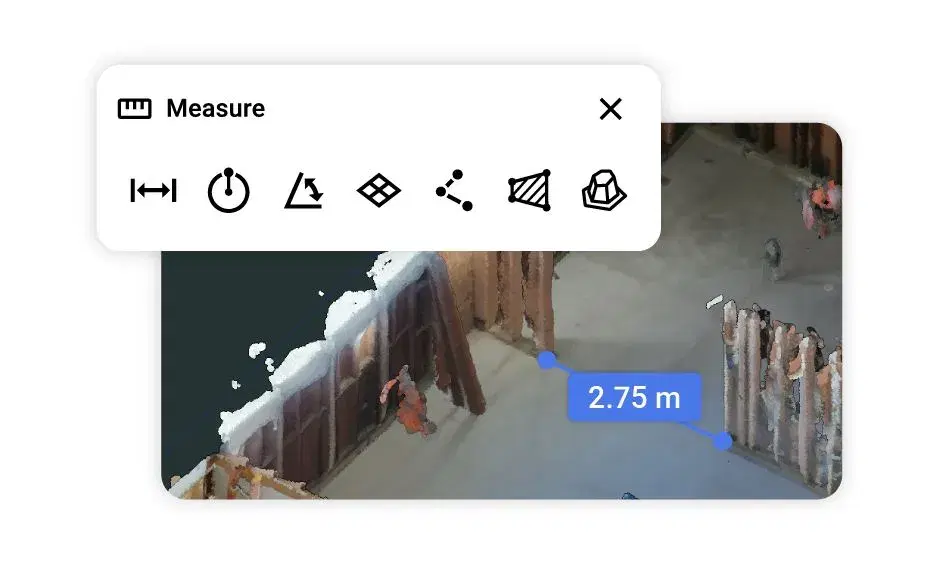
The QP emails the Processing Officer with login instructions. BCA reviews the capture and issues tagged comments within three working days. The QP replies inside the platform using standard tags, Rectified or Clarified, each with photo evidence. The platform then generates a site inspection closure report listing every non-compliance and observation, its rectification photo, and any unresolved clarification. That report is submitted with the other TOP/CSC documents before the permit is issued.
Benefits of Reality Capture
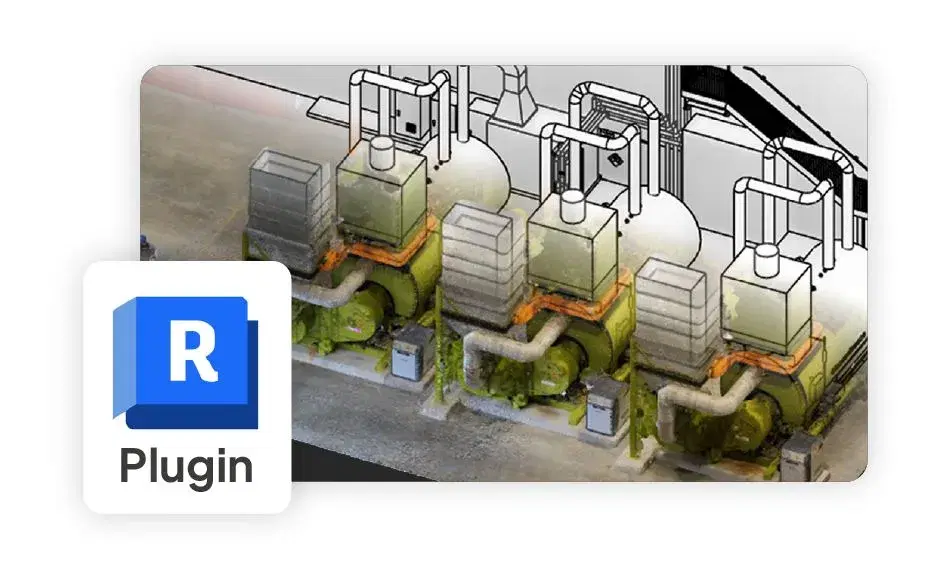
Virtual TOP is just one aspect of the overall digital delivery workflow. Incorporated into day-to-day site operations, the same capture can also be re-used to support other project delivery workflows such as:
- Progress tracking. The 360 capture is converted into a point cloud to compare against a BIM model for payment claims and progress reporting.
- Quality management. Issues are progressively tracked in a Common Data Environment (CDE) like Forma or ProjectWise.
- Virtual TOP. Provide external stakeholders (i.e. local authorities) with a digital twin of the site, reducing the need to schedule multiple site visits.
- Digital twin for handover. With scan to BIM, the as-built condition of the site is recreated as a model. Perfect for older buildings without existing documentation, as is typical for alteration and addition (A&A) works.
The leading firms are differentiating themselves by delivering greater value to their customers. 360 capture with a solution like CupixWorks is cost-effective as opposed to engaging a surveyor, and can work for use cases like Virtual TOP.
Contractors still on the fence about how VTOP can work for them can partner with a service provider to test it on their project.
Further reading
- BCA, Guidebook for Virtual TOP/CSC (360 Capture), first edition, December 2024
- BCA, TOP/CSC application page
- BCA, Integrated Digital Delivery (IDD) Requirements guide, May 2024
- JTC, press release on the first virtual TOP pilot, September 2023
- JTC, IDDTA certified solutions list
- REDAS, Consult Early, Scan Smart, Save Time, November 2025
- Stacked Homes, Whole-of-Government rollout and Grand Dunman, September 2026
- CupixVista and its support FAQs
Frequently Asked Questions

Related Articles
BIM for Project Owners: Benefits and Use Cases
How BIM gives a project owner visibility, cost control, and faster decisions across the lifecycle, even when the project is already over budget.
BIM Collaborate Pro Is Now Forma: What Changed (2026)
Autodesk renamed ACC and BIM Collaborate Pro to Forma for Construction in March 2026. See the full name mapping, module comparison, and SGD 1,700/yr pricing.
Outsourced BIM Services in Singapore: CORENET Submission, Coordination, and Handover
How outsourced BIM delivery works in Singapore, stage by stage. Covers CORENET X submission, design & construction implementation, and project handover.